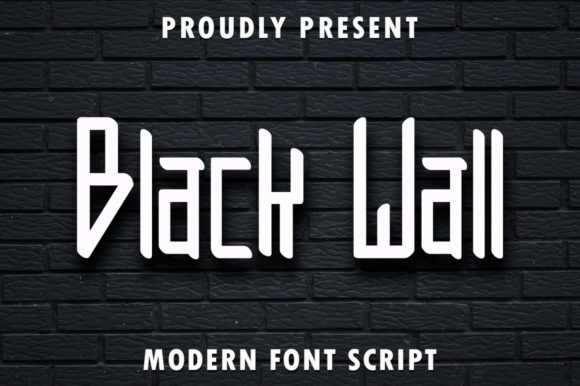
Black Wall Display Font for Modern Web Design
Black Wall is a fun and friendly display font — clean, confident, and just a little bit quirky. As a web designer who ships high-conversion landing pages, SaaS dashboards, and boutique e-commerce sites, I reach for Black Wall when I need a display font that communicates personality without sacrificing digital clarity. It’s not a workhorse body typeface — it’s a strategic branding tool: purpose-built for headlines, logos, hero sections, and any place where tone, recognition, and visual rhythm matter most.
Black Wall for Logo Design and Brand Identity Systems
Black Wall is a display font with strong geometric structure and subtle character quirks — think balanced letterforms with soft terminals and open counters. That balance makes it ideal for logo design where legibility at small sizes (favicon, app icon, social profile) meets expressive tone. Unlike overly decorative fonts that break down on mobile or in dark mode, Black Wall holds its shape across devices. Use it for wordmarks in creative agencies, indie product brands, or lifestyle blogs — especially when your brand voice leans warm, approachable, and intentionally unpolished. Pair it with a neutral sans serif like Inter or Manrope for body copy to reinforce hierarchy and ensure WCAG-compliant contrast ratios.
Black Wall for Landing Page Headlines and Hero Sections
Black Wall is a display font engineered for impact above the fold. Its clean lines and generous x-height make it highly scannable on desktop and mobile — critical for hero sections where users decide in under 3 seconds whether to stay or scroll. I use Black Wall for primary headlines on SaaS trial pages, course sales sites, and portfolio showcases because it delivers confidence without coldness. For best results: set it at 48–72px on desktop, scale responsively to 32–40px on mobile, and always test against background images or gradients. Avoid using it below 24px — it’s a display font, not a UI label font.
Black Wall for Social Media Graphics and Digital Ads
Black Wall is a display font that performs exceptionally well in fast-scrolling, low-attention environments — exactly where social media graphics and digital ads live. Its friendly quirkiness cuts through algorithmic noise, while its clean construction ensures readability even at thumbnail size. I use it for Instagram story text overlays, Pinterest pins, and Facebook ad banners — always as short, bold phrases (“Your Creative Space Starts Here”, “Join the Waitlist”, “Limited Edition Drop”). Never stretch or distort it; let its natural rhythm do the work. Export as SVG or use webfont loading with font-display: swap to prevent layout shifts.
Black Wall for Online Store Banners and Product Branding
Black Wall is a display font that adds craft and cohesion to online store banners — especially for handmade goods, stationery brands, wedding planners, and indie beauty labels. Its warmth supports emotional connection, while its structural clarity builds trust in pricing, offers, and CTAs. Use it for banner headlines (“Hand-Poured Soy Candles”, “Summer Collection Live”), not product descriptions or SKU tags. For Shopify or WooCommerce banners, pair with Montserrat or Lato for supporting text — and always verify licensing covers commercial use across domains, themes, and client projects.
Black Wall for Crafty DIY Projects and Digital Templates
Black Wall is a display font built for makers — whether you’re designing Canva templates, Notion brand kits, printable planners, or digital sticker packs. Its friendliness invites engagement; its clean outlines render crisply at any resolution. As a UI designer, I’ve embedded Black Wall into Figma community files and Notion template libraries because it scales predictably and feels intentional, not generic. Bonus: its file package includes standard OpenType features and web-optimized WOFF2 files — no extra conversion needed. Just confirm your license permits redistribution if bundling into paid templates.
Black Wall for Branded Blog Headers and Editorial Graphics
Black Wall is a display font that brings editorial energy to blog headers without overwhelming long-form content. It works best for category banners (“Behind the Scenes”, “New Tutorials”, “Client Spotlights”) and featured post titles — never body paragraphs or pull quotes. Its slight quirkiness signals creativity, while its consistent stroke weight maintains rhythm across responsive layouts. On dark-mode blogs, use #FFFFFF with 90% opacity over deep charcoal backgrounds; on light mode, pair with #2D3748 for optimal contrast. Always test line height: 1.2–1.35 works best for single-line display usage.
Black Wall for Mobile App Screens and UI Accents
Black Wall is a display font that shines in controlled UI contexts — splash screens, empty states, onboarding headlines, and feature announcement modals. Its clean geometry reads clearly on OLED and retina displays, and its friendly tone humanizes technical products. Use it sparingly: once per screen, max. Never for navigation labels, form fields, or tab bars — reserve it for moments where brand voice must land first. For iOS and Android, embed via system-safe webfont stacks or native font loading; avoid dynamic resizing below 28pt to preserve character integrity.
Black Wall Font Pairing Strategies for Web Designers
Black Wall is a display font that pairs effortlessly with functional sans serifs (Inter, Poppins, Work Sans) and restrained serifs (Cormorant Garamond, Playfair Display) — but never with other display or script fonts. The goal is contrast, not competition. For a coaching website: Black Wall headline + Inter body + subtle italic accent. For a print-focused creative studio: Black Wall + Source Serif Pro for rich typographic texture. Always test pairing at real sizes — what looks balanced in Figma may fail on Safari iOS. And remember: Black Wall is a display font, not a system font — serve it efficiently, license it properly, and use it with intention.
Black Wall Licensing for Websites, Client Work, and Digital Products
Black Wall is a display font licensed for commercial use — including websites, client projects, SaaS platforms, online stores, digital templates, and branded assets. Before deploying, verify your license covers web embedding (WOFF2), app integration, and resale in design bundles. Most premium fonts like Black Wall include desktop, web, and app licenses — but never assume. If you're a freelancer or agency, choose the extended license: it covers unlimited client sites and white-labeled products. No hidden fees, no subscription — just one-time purchase, full rights, and zero legal friction.